Welcome to My Digital Marketing Blog
How will the Cookie crumble!?
In a world that won’t stand still, what does constant progression mean for the Marketing Industry as we know it today? For years the marketing and advertising industry have relied upon and benefited from the cookie trail left behind on the websites the user has browsed. The use of cookie collection has been the pinnacle of success for many ad tech companies such as Criteo, Adroll, Quantcast… to name but a few but ever since the Cambridge Analytica data scandal in early 2018 when it was revealed that Cambridge Analytica had harvested the personal data of millions of people’s Facebook profiles without their consent and used it for political advertising purposes, things began to tighten up a little. Everyday users who had previously been oblivious to how their data was stored were now seeking more clarification. From here the impact of GDPR and all other data privacy regulations began to change the way we as marketers do business.
Following Safari and Firefox, Google’s impending changes in phasing out the use of third party cookies on chrome has meant many businesses are gearing up for the end of the cookie. But what exactly does it mean for attribution and what is going to take its place? Here in early 2020 we are now waiting in anticipation wanting to know what is to become of the Cookie!? The emphasis on first party data becomes stronger now than ever it was before. Strong engaging content aimed at keeping the user on site might be the key metric of success when we can no longer rely on untrustworthy third party data.
Programmatic advertising?
“You have to know the past to understand the present.”
Carl Sagan
To understand what these changes mean for attribution in the advertising world we must first understand the role of the cookie and the part it played in the buying and selling of eyeballs on the open ad exchange….. Programmatic Advertising, this is your life!

1994 seen the launch of the first digital adverts on the world wide web. During these early days there were the buyers (known as Agency/Advertisers) and there were the sellers (publishers) who sold their inventory directly. But the rapid development of websites gave rise to a new set of companies called ad networks who acted as a middle man between the advertisers and the publishers, buying up mainly remnant inventory from the publisher, packaging it up into sought after audiences and then selling it onto the advertiser.
It remained the wild wild west of digital advertising for almost ten years. Too many companies were now competing and often the same audiences were been sold twice and three times. The advertisers demanded more control over their spend and the publishers wanted to monetize their inventory much more efficiently.
The Ad EXchange Launches in 2005
A much needed platform called DoubleClick came into the spotlight. The platform worked like an open stock exchange only it was for the buying and selling of advertising. In 2008 DoubleClick was acquired by Google for $3.1 Billion giving Google access to both sides of the coin, the buyers and sellers. The exchange became increasingly sophisticated as the agencies invested more into developing their own trade desks and Demand Side Platforms (DSP) to increase their buying performances. The publishers responded to this with Supply Side Platforms (SSP) so they could monetize their inventory in the most efficient way. On the open ad exchange the audience were the inventory and the buyer with the highest bid would win. The ad server will display the Publishers’ inventory on the exchange in a snippet of code or an ad tag. Within this ad tag all the targeting criteria such as demographics which include gender, age, Geo location.. as well as behavioral data which include peoples search and browsing habits are displayed. The DSP sends a similar ad request tag on behalf of the advertiser and if it’s a match and the advertiser is willing to bid the highest price then it wins that inventory. All of this happens in less than a second, it’s called Real Time Bidding and it has today become a multi billion industry. The exchange and advancing ad tech gives the advertisers unbound access to a huge range of inventory across the globe and the possibility to cherry pick only the most valuable inventory for their business. Simultaneously it enables the publisher to open up their ads to the auction increasing unbound sales revenue whilst still controlling their inventory’s worth through prioritization and pricing rules. This is RTB and it happens in the open auction where as programmatic advertising happens in the private auction and is just another way to trade inventory, almost an extension of RTB but with more rules. Programmatic guaranteed – one to one direct deals. Programmatic guaranteed (PG) campaigns are traditional old school deals between the publisher and the advertiser but their efficient set up means it cuts the buy and sell process down to just a few steps and allows the buyer more transparency during their campaign. Private Marketplace (PMP) – set up for a select group of advertisers wanting to buy a select type of inventory. Its a private auction that happens in real time but the selected advertisers are given a higher priority than that of an open auction and finally Preferred Deals – allows one select advertiser a “first look” opportunity to buy exclusive inventory at a negotiated price before it becomes available on the rest of the private and open auctions. In 2018 in the USA alone, programmatic advertising spend exceeded $23 billion compared to $6.3 billion in 2014.
Right now the ad networks and the ad exchange work alone side each, the ad networks even buy of the exchange on behalf of the agencies/advertisers and sell inventory that way. Stay tuned because we are only scratching the surface. Advertising technology is so advanced and so exciting that it almost feels like sometimes anything is possible. True, GDPR has clipped its wings but watch this space, the cookies may crumble but the power of advertising will not…..
It’s in our Hands
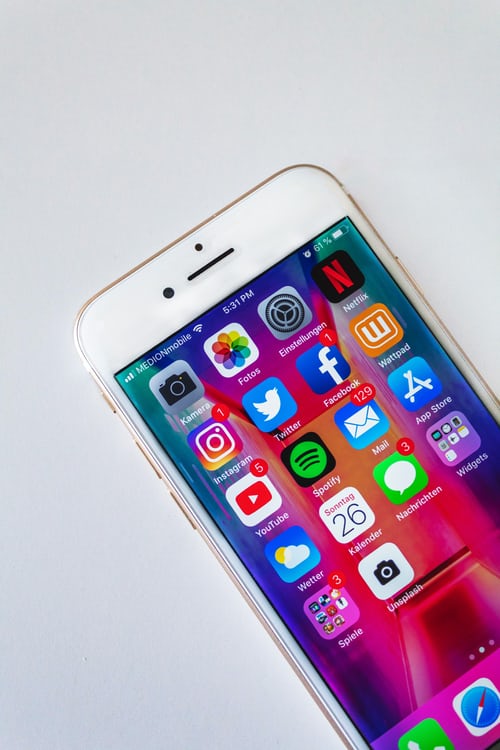
Let’s start taking this personal…. programmatic advertising and real time bidding on the open exchange keeps it at arm’s length for most of us but let’s recap on how far we have come from the early days of big broad advertising to targeting really specific niche audience. Today is has become a science, identifying your audience, knowing who they are and where they are going is relatively easy! Marketing and advertising technology is constantly evolving, tweaking and creating new and better techniques to remind the user to make that purchase or make a suggestion to purchase something similar. A transaction is made so simple that the even thought process behind a purchase can be hindered or done for us. Browsing on the internet is like window shopping only on the internet can it be recorded.
Coming from the first static display ads on the internet to placing links within the ads it leads to the use of popular performance metrics such as CTRs and viewability ratings and cookies have contributed greatly to its success. Cookies… the snippet of code placed on the user’s device by whatever website or app they are visiting, gives a unique id number with a collection of a transparent amount of data based on their browsing behavior. This is stored on the user’s hard drive and used while they continue to surf the web or until they clear their cookies.
Relevant Advertising
Advertisers and Publishers use cookie data in programmatic ad serving to match an advertiser’s ad to the user’s ad request. When the user lands on a publisher’s website it tells the Ad Exchange that there is an ad slot available and sends an ad request with the cookie data included to call the most suitable ad. The DSP (demand side platform) and the SSP (supply side platform) talk to each other. The DSP is a cloud based software where the advertiser can list or predefine what they want to buy and the SSP is how publishers list their advertising inventory for sale. Millions of advertisements are considered this way in a the split second auction and the cookies role in remarketing advertising gives the exchange the relevant data and information to serve more relevant advertising that is of interest to them.
You Tube knows you better that your friends do.
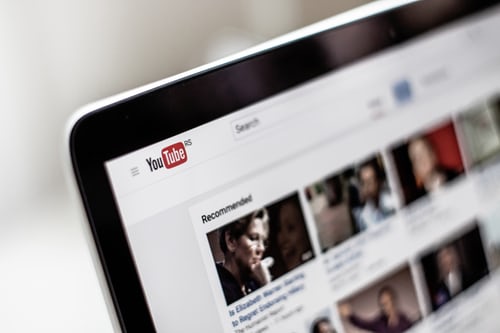
Audience targeting on YouTube combines a number of “signals” together to create a niche user group who they know are truly passionate about the category they are in. Affinity and custom affinity audiences are created through an holistic picture profile based on interest and habits. These are not just merely passionate but are extremely passionate to be categorised in this group. Custom affinity audiences are unique and created from Signals such as keywords, URLs, inputs from apps and map locations. If a user searches a movie review on their phone, watches a trailer on youtube , looks up the nearest cinema in their location and then purchases a ticket from a ticket app they must be interested in movies right! Survey Leaving nothing to chance Google will validate this information by sending out surveys. Scale: machine learning finds other users on YouTube who belong to this audience and share the same characteristics. It leads to incredibly high reach and high accuracy.
Over 85% of users who use Google search are on youtube so it’s a really clever way of piecing together your data and building audiences. There are also remarketing audiences, to reinforce your message or brand with people who have visited your website. Customer match or similar audience, based on customers who are in you CRM system using data like email, address, phone numbers. there are In Market audiences, using signals like google search, google maps, youtube videos to target people who qualify and are actively in the market to make a particular purchase. It even has a Life event audience that looks at actions across YouTube, Google Search and Google Maps that indicate that someone is going through a major life event. That person is then categorised to be reached with right message. Like if you were getting married and all you searched for was wedding essentials. Youtube is there with you.
Google don’t keep this a secret, they make these capabilities available to every business who use their product. Google analytics is free, can be linked to your website in just a few clicks and gives you access to the most reliable data there is which is your own first party data. Youtube is just a good example of how to do it really well.
Every app we download onto our devices has the ability to use that devices browser history or use a unique identifier to track user behaviour. The level of trust is not always high and no one really bothers to read the terms and conditions when giving consent to the use of cookie data anyway, so what’s to stop those apps from using your data for other purposes or selling it onto third parties? Nothing really!
The importance of first party data!
As the demise of third party cookies means that now, more than ever we must rely on first party data and the content on our websites if we really want to engage with our users and keep them coming back to our business. The developments of GDPR will continue to evolve and regulations and restrictions will become tighter. Knowing the value of first party data and having the skills to harness it in a way that is innovative and unique for your brand is a key factor for success.
First-party audiences consist of people who have:
- Engaged with your content online or visited your website
- Shared their email, phone number or address with you
- Reach extension based on your Remarketing or Customer Match list
https://blog.hubspot.com/service/first-party-data
As Google announce plans to phase out the use of third party cookies within the next two years I wonder where this road will lead…
Revert to Contextual Targeting
“Rather than showing you a Nike ad because you were shopping for shoes two hours ago,” he said, “you’ll get a Nike ad because you’re reading about the Olympics.”
DoubleVerify’s Managing Director for EMEA Tanzil Bukhari – https://www.clickz.com/
This means user targeting and collection of users data will become obsolete due to breaches of privacy regulations.
Or Own your Data
Although the use of first party data is still not bulletproof, for now however it is beneficial to be able utilize it to the best business advantages. This method favors the bigger owners such as Google, Facebook and Amazon who sit on a wealth of owned and first party data but how can the smaller publishers and businesses keep up. Can they figure out a way to share their first party data through partnerships or are just going around in circles with this one.
Unique ID_Cross Device Tracking

Exploring the possibilities, my gut tells me that although the use of third party data may one day be gone its legacy will certainly not be forgotten. So many years of advancing ad technologies, methodically developed to utilize user behavior across the web will not be done in vain. In my opinion these are the building blocks for tomorrow on which we will stand. For every industry event where Google are present the mention of cross device tracking has been a carrot to dangle in front of any marketeer willing to listen. What good is the consistent collection of data if it is confined to just one device? How accurate can that user profile be if the user starts their customers journey on one device and eventually drops off at the end of the funnel with out us ever knowing why!
https://www.adpushup.com/: “User-ID is different from Client-ID, the former identifies a user across-devices, whereas the latter identifies a unique browser/device.”
Google is already using user ID in Google analytics to allow any publisher to tack the user across all devices. Google ad and campaign manager products goes a little bit more granular and allows you to layer conversion, leads, click through rate and more to build your profile. This is based on the users usage on mobile and app where the cookie shall not pass.
My Time Capsule from 2020
Isn’t is exciting to watch history unfold every day right before your eyes. Nobody knows what the future will be but we can make an estimated guess based on past events. My curious mind still has so many questions and I wonder how long it will be until they are answered.
Are unique identifiers the new cookies, will the responsibility shift from the user to control their browsing behavior on the web to the website owner controlling how their data is stored. How will the smaller publisher and business compete with first party data giants? Least we forget how much Google can gather about behaviors when they have you covered every step of the way, from Google search to YouTube and onto Google maps. What does the runway look like for the big data companies like Google and Facebook. Will the age of using different browsers and downloading multiple apps be behind us sooner than we think and what will this mean for the marketing and advertising industry. To quote Voltaire “with great power comes great responsibility”
Follow My Blog
Get new content delivered directly to your inbox.
 The future of Marketing Technology is bright!